Can Dogs Eat Halloween Candy? Chocolate, Xylitol and Costume Safety Explained
Dogs should not eat Halloween candy. Keep human sweets out of reach, especially chocolate and products containing xylitol. If either may have been eaten, contact a veterinarian immediately rather than waiting for symptoms.
Halloween brings extra treats, costumes and decorations into a home. Here is what to check for dogs and cats, and what information to collect if a pet gets into the candy.
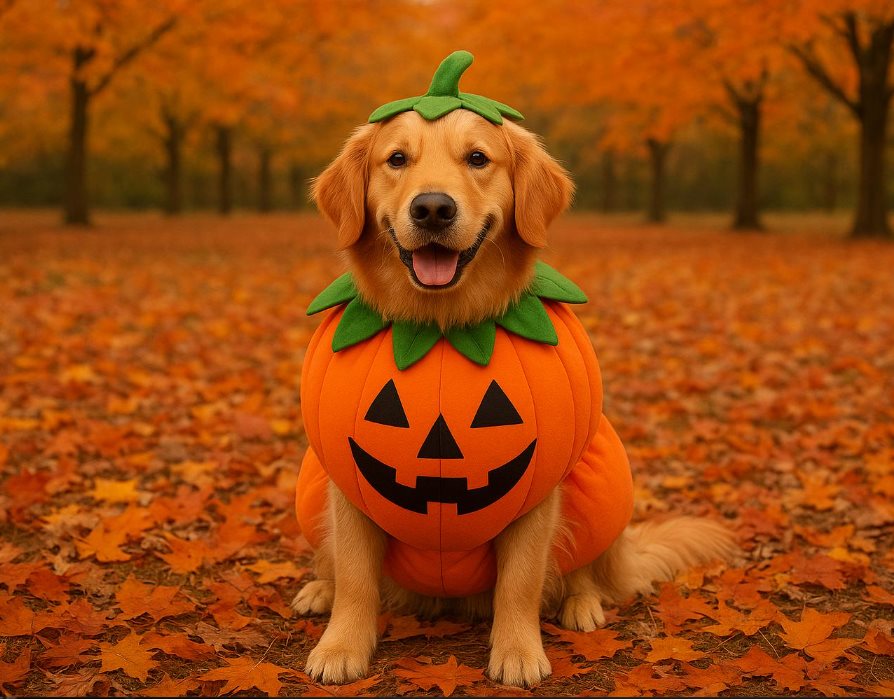
Why is chocolate dangerous for dogs?
Chocolate contains theobromine and caffeine. Poisoning can affect the heart and nervous system, causing arrhythmias or seizures in severe cases. Risk varies with the product, amount eaten and the dog’s body weight. Dark and baking chocolate can be especially dangerous. Merck Veterinary Manual: chocolate toxicosis ↗
Milk chocolate is not a reason to assume an exposure is harmless. Contact a veterinarian promptly and keep the packaging. Chocolate must also be kept away from cats. ASPCA Halloween safety guidance ↗
Is sugar-free candy safe?
No. Some sugar-free sweets and gum contain xylitol. FDA warns that it can cause dangerously low blood sugar and liver injury in dogs. This dog-specific risk is not a dose rule for every other species. FDA: xylitol is toxic to dogs ↗
If xylitol is present or may be present, seek urgent veterinary advice. If ingredients are unclear after an exposure, keep checking the package while contacting the clinic; do not postpone the call. Different candies have different ingredients, but human candy is not an appropriate dog treat.
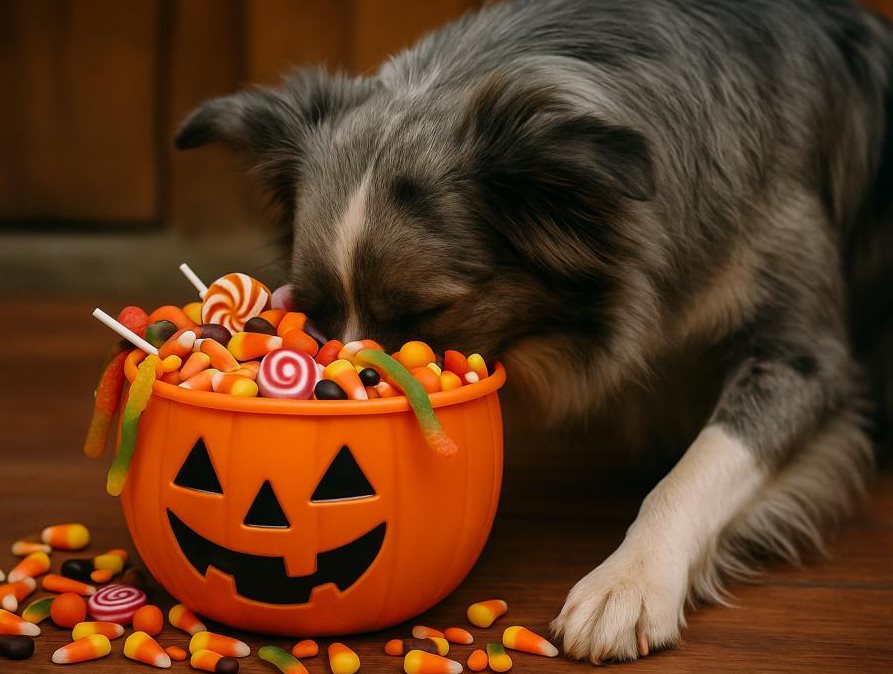
What about Halloween costumes?
Comfort comes before appearance. An outfit must not restrict breathing, movement or vision, and must not have easily swallowed accessories. Never force a reluctant pet to wear one or leave a costumed pet unattended. ASPCA costume checks ↗ · AAHA Halloween safety ↗
- Check the fit and whether the outfit can twist or snag.
- Look for dangling or chewable pieces.
- Stop the photo session and remove the outfit if the pet seems distressed.
Other Halloween hazards
Put open flames, electrical cords, small decorations and wrappers out of reach. Give an anxious pet a quiet space away from visitors and the front door. Frequent door opening can allow escapes, so check the leash and identification before an outing. AAHA food and escape-prevention guidance ↗
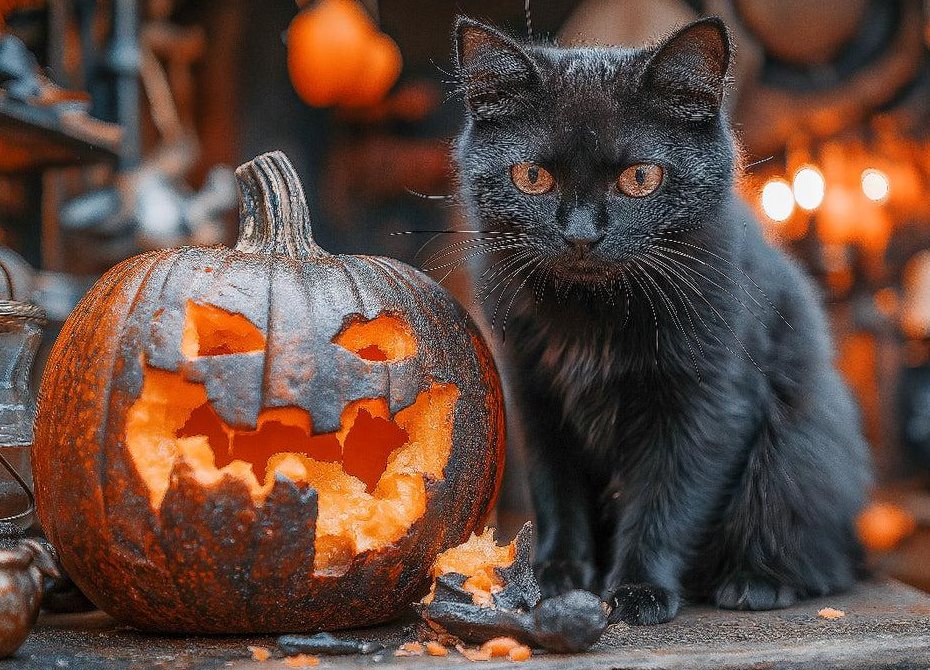
What should I do if my pet eats Halloween candy?
Contact your veterinarian or an emergency veterinary clinic promptly. Do not wait for symptoms if chocolate, xylitol or another potentially toxic ingredient may be involved. Tell the clinic if wrappers may also have been swallowed.
- Save the product name, packaging and ingredient list.
- Estimate the amount eaten and time of ingestion.
- Provide the species, body weight and current condition.
- Do not induce vomiting or administer human medication without veterinary direction.
Frequently asked questions
Can cats eat chocolate?
No. Chocolate can be toxic to cats too. Contact a veterinarian if exposure may have occurred.
Are sugar-free sweets better for dogs?
No. Some contain xylitol. Human sweets should not be used as dog treats.
Can my dog wear a Halloween costume?
Only if the dog is comfortable and the outfit is properly fitted, safe and supervised.
Explore more on PetNyam
- Chocolate risks for dogs
- Xylitol and sugar-free products
- Chocolate safety for cats
- Find species-specific food information
Choose treats appropriate for the species and individual diet instead of sharing human candy. A pet-food label does not make every product suitable for every animal.
Sources
- ASPCA — Halloween Safety Tips ↗
- AAHA — Halloween Safety for Pets ↗
- Merck Veterinary Manual — Chocolate Toxicosis in Animals ↗
- FDA — Paws Off! Xylitol is Toxic to Dogs ↗
Published and sources checked November 1, 2026. Edited with AI assistance from the user’s draft and images, checked against the cited sources. Illustrations do not document the operator’s pets or a feeding experience. General safety information, not veterinary care or an independent veterinary review.